What was eaten in a castle (particularly Château de Cherveux and its domain)?
Generalities & Dietetics: In the thirteenth century, Aldebrandin de Sienne, living in Champagne, wrote in French the Régime du corps diet book for a fairly large public, marking the advent of accessible dietetics. Another major influence, the Tacuinum Sanitatis, was translated from an 10th-century Baghdad treatise by Ibn Butlan. It featured detailed tables outlining the therapeutic qualities of foodstuffs.
In 1260, a Latin adaptation was created, likely for Count Manfred of Sicily. Two primary versions survived: a full textual adaptation of the original, and a lavishly illuminated 15th-century Italian edition.
In medieval health philosophy, human wellness depended on balancing four bodily humors (blood, phlegm, yellow bile, and black bile) corresponding to the four elemental qualities. Foodstuffs directly influenced these humors: birds living in the upper air were considered warm and humid, while subterranean root vegetables were cold and dry. Perfect health required tailored nutrition matched to an individual's temperament, age, season, and physical condition.
What was eaten in a castle (particularly Château de Cherveux and its domain)?
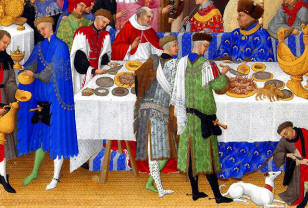
Feasts & Banquets at the castle

Crop cultivation according to medieval seasons

A highly spiced cuisine designed to enhance rich noble dishes.
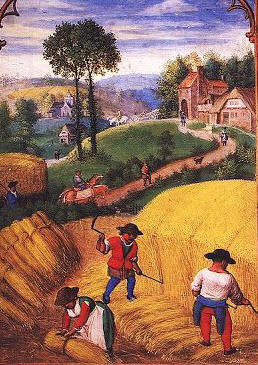

Bread and grain porridges (the fertile plains of Cherveux favored wheat growing).

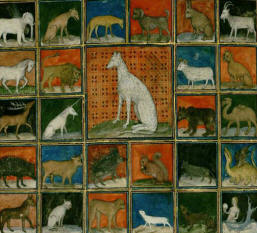
Livestock raising: Pork, beef, and mutton

Poultry: Chickens, ducks, and various farm birds.
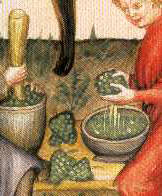
Wine vinegars, medieval sauces, and green-grape verjuice
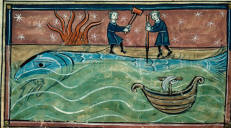
With La Rochelle nearby: fresh sea fish and shellfish (oysters, crabs, mussels, cockles).

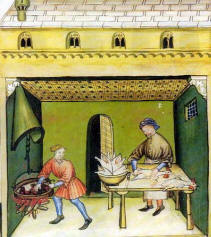

River fish (trout) and crayfish from the local Marcusson stream, alongside castle moat fish (carp, eel, roach).
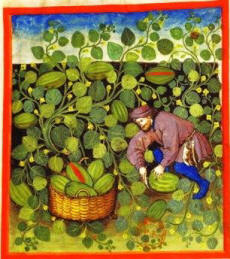
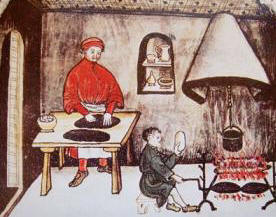
Garden vegetables & traditional Porées (green and white pottages)

Goat cheeses (emblematic specialty of Poitou-Charentes) and cow milk cheeses.
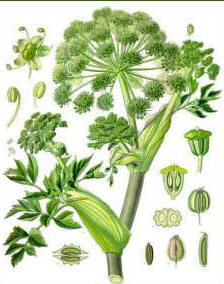
Candied angelica from the Marais Poitevin, traditional hams, and cured sausages.